

News
August 17, 2026

Communication firms say they're training employees on ethics, and workers even give those programs solid marks. Yet many employees don't report ethical concerns, some fear retaliation, and younger professionals may be more confident in their ethical judgment than their preparation warrants.
July 28, 2026

Baylor Journalism faculty, students, and alumni will play prominent leadership, research, and service roles at the 2026 AEJMC Annual Conference in New Orleans.
July 2, 2026
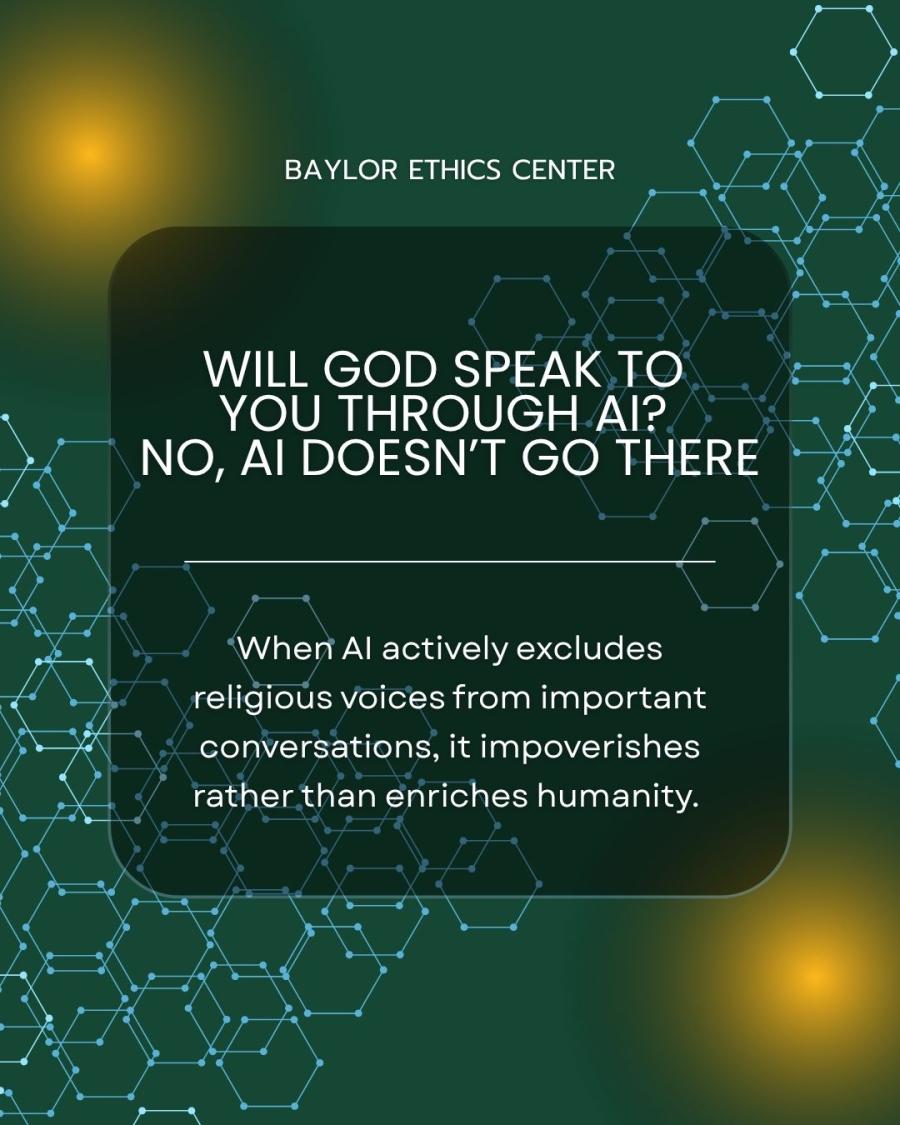
We are seeing a systematic pattern of religious omissions. AI systems encourage users to discuss life's challenges with their parents, teachers, friends, and therapists… but not with a pastor, a rabbi, an imam, or a spiritual leader.
June 16, 2026
Why might people look to the church before looking to the technologists developing AI to answer questions about how to use it?
“The simple answer, probably, is that the knowledge and the understanding and the experience and expertise that you need to develop AI systems is just not the same as the knowledge and the understanding and the experience that you need to reflect ethically on them [and] to address the questions these systems raise,” explained Dr. Neil Messer, a professor of theological bioethics at Baylor.
May 8, 2026

The new Center for Ethics at Baylor University in the College of Arts & Sciences will bring together people and resources to coordinate and expand the initiatives on campus that explicitly engage ethical issues.
November 15, 2024

Several faculty in and supporting Environmental Humanities just spoke at the UN Habitat World Urban Forum 12 (Nov. 4-8) in Cairo, Egypt. Dr. Stephanie Boddie (Social Work, Environmental Humanities faculty affiliate) and Dr. Joshua King (English, Environmental Humanities Director) shared about their work with the Sustainable Community and Regenerative Agriculture (SCRAP) Collective, and Dr. Paul Martens (Religion, Director of Baylor's Ethics Initiative and Interdisciplinary Programs) organized an interdisciplinary panel focused on interfaith human dignity.
July 23, 2023
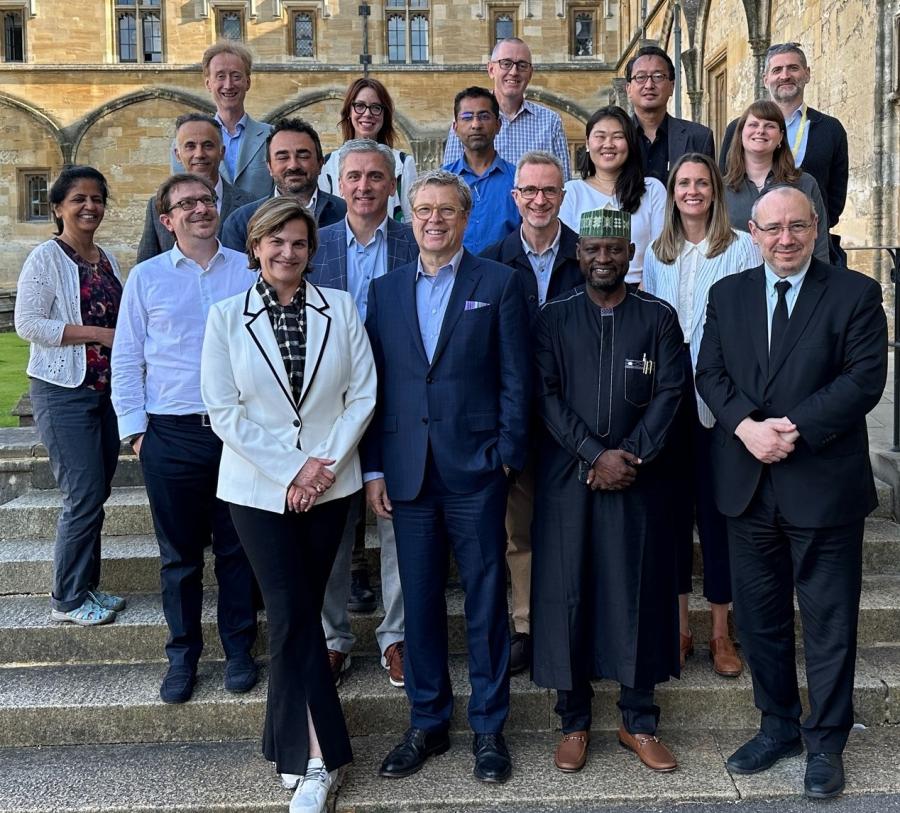
Three of the Baylor Ethics Initiative faculty (Dr. Devan Stahl, Dr. Neil Messer, and Dr. Paul Martens) participated in the AI and Human Dignity: Faith, Freedom, Fairness, and Flourishing workshop.